
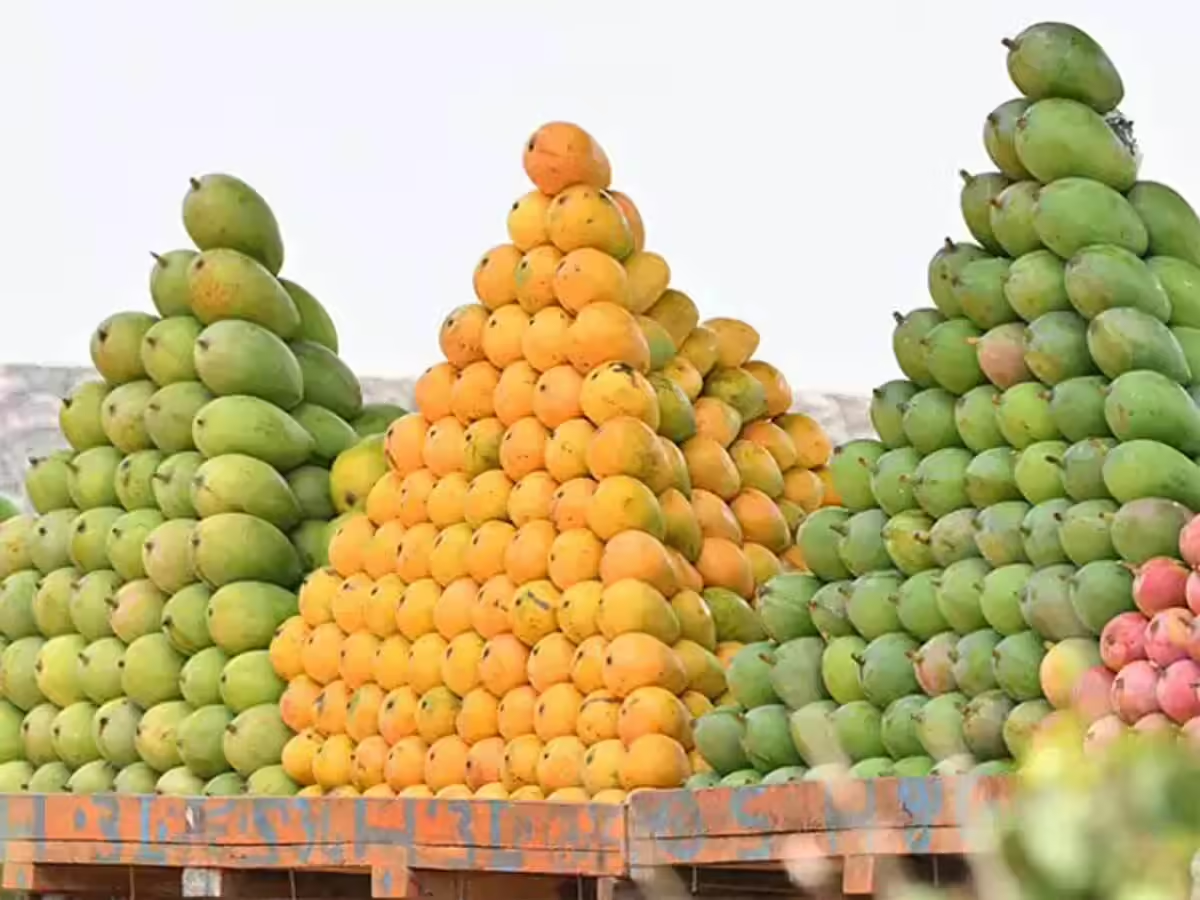
Bangladesh produces mangoes that serious fruit buyers know by name. Himsagar. Langra. Fazli. These aren’t just local varieties — they’re export-grade fruits that command premium pricing in the UK, GCC, and Southeast Asian markets. Yet, mango export from Bangladesh still flies under the radar for many international importers. That’s changing fast.
Why Bangladeshi Mango Stands Out in Global Markets
Bangladeshi mangoes aren’t just locally loved. Buyers in the UK, the GCC, Canada, and Malaysia actively source them — especially during the peak season between May and August. The reason is simple: flavor profile and variety diversity.
No other country produces Himsagar mango at scale. It’s fiberless, deeply aromatic, and carries a natural sweetness that processed alternatives can’t replicate. International ethnic grocery markets and premium supermarkets have started listing it separately by name — not just as “Bangladeshi mango.”
That kind of market distinction takes years to build. Bangladesh has built it.
Top Export Varieties from Bangladesh
Not all mangoes export well. Texture, shelf life, and size all affect whether a variety can survive air freight and still arrive in prime condition. These four varieties have proven themselves in international markets:
- Himsagar — Fiberless flesh, intense aroma, premium positioning. Peak season: late May to June.
- Langra — Balanced sweetness, slightly tangy finish. Popular in UK and EU ethnic markets.
- Fazli — Large size, late-season variety (July–August), good for extended export windows.
- Amrupali — Deep orange flesh, high sugar content, strong visual appeal on retail shelves.
Each variety suits different buyer profiles. Retail chains often prefer Himsagar and Amrupali for appearance and taste. Wholesale and foodservice buyers tend to favor Fazli for volume and Langra for versatility.
How the Mango Export Process Works in Bangladesh
From farm to flight, timing is everything.
Bangladesh’s mango export supply chain runs on a tight window. Mangoes are hand-harvested at optimal maturity — not too early, not too late. Early harvesting kills flavor. Over-ripening kills shelf life. Getting that call right requires experienced farm-level supervision.
Here’s how a standard export shipment moves:
- Farm-level harvesting — Hand-picked, sorted by maturity and size
- Washing and sanitizing — Reduces surface contamination before packing
- Grading and packing — Packed in export-grade cartons (2kg, 4kg, or 5kg) with foam net protection
- Phytosanitary certification — Mandatory for EU, UK, and GCC entry
- Air freight dispatch — Shipment within 24–48 hours of harvest
That 24–48 hour window is critical. Fresh mango from Bangladesh loses quality fast at ambient temperature. Air freight is the only viable mode for premium fresh shipments.
Key Export Destinations for Bangladeshi Mango
The Bangladesh mango export market is currently concentrated in a few key regions:
- United Kingdom — Large South Asian diaspora drives consistent demand, especially for Himsagar and Langra during Eid season
- GCC countries (UAE, Saudi Arabia, Qatar) — Strong demand from Bangladeshi expat communities and premium fruit retail
- Malaysia and Singapore — Growing South Asian food retail sector
- Canada — Niche but growing ethnic grocery market
The EU presents an opportunity, but stricter phytosanitary requirements mean exporters need to work with certified handlers from the start.
What Importers Should Check Before Sourcing
Buying export mangoes from Bangladesh without the right due diligence is a risk. Here are the non-negotiables:
- Phytosanitary certificate — Issued by the Bangladesh government. Required for all fresh produce exports.
- Export compliance — Check if the exporter works with DAE (Department of Agricultural Extension)-approved farms.
- Cold chain capability — Does the exporter have pre-cooling or cold storage at the packing stage?
- MOQ and packaging flexibility — Some buyers need private-label cartons. Confirm this upfront.
- Shipment schedule — Season runs May–August. Plan your order calendar accordingly.
Working with an established Bangladesh agricultural exporter who handles the entire chain — from farm sourcing to flight booking — reduces risk significantly.
Private Label and Retail-Ready Packaging
More importers are asking for private label mango packaging from Bangladesh. This means branded cartons, custom weight configurations, and retail-ready presentation. It’s no longer just a bulk commodity play.
Diamond Agri Industries offers private label carton options with MOQ requirements. This is particularly useful for ethnic supermarket chains and specialty food distributors who want consistent branding across their fresh produce range.
Is Now the Right Time to Import Bangladeshi Mango?
Demand for premium tropical fruit exports is growing globally. Consumers in the UK and GCC increasingly want fruit with a traceable origin and distinct flavor — not generic, mass-produced alternatives.
Bangladeshi mango checks both boxes. The origin story is strong, the varieties are distinctive, and the price point remains competitive against Indian and Pakistani alternatives.
The window is seasonal. If you’re planning to source for the upcoming mango season, enquiries should go out by March–April at the latest to secure allocation and sort logistics.
Work With a Reliable Bangladesh Mango Exporter
At Diamond Agri Industries, we handle fresh mango export from Bangladesh end-to-end — farm sourcing, grading, certification, packaging, and air freight coordination to the UK, EU, GCC, Canada, Malaysia, and Singapore.
We work with importers who need reliability, not just the lowest quote.
View our Fresh Mango Export page to see available varieties, packaging options, and export specifications.
Submit a buyer enquiry to get shipment schedules and bulk pricing for the upcoming season.